Showing posts with label Food for Events. Show all posts

Friday, 11 September 2009

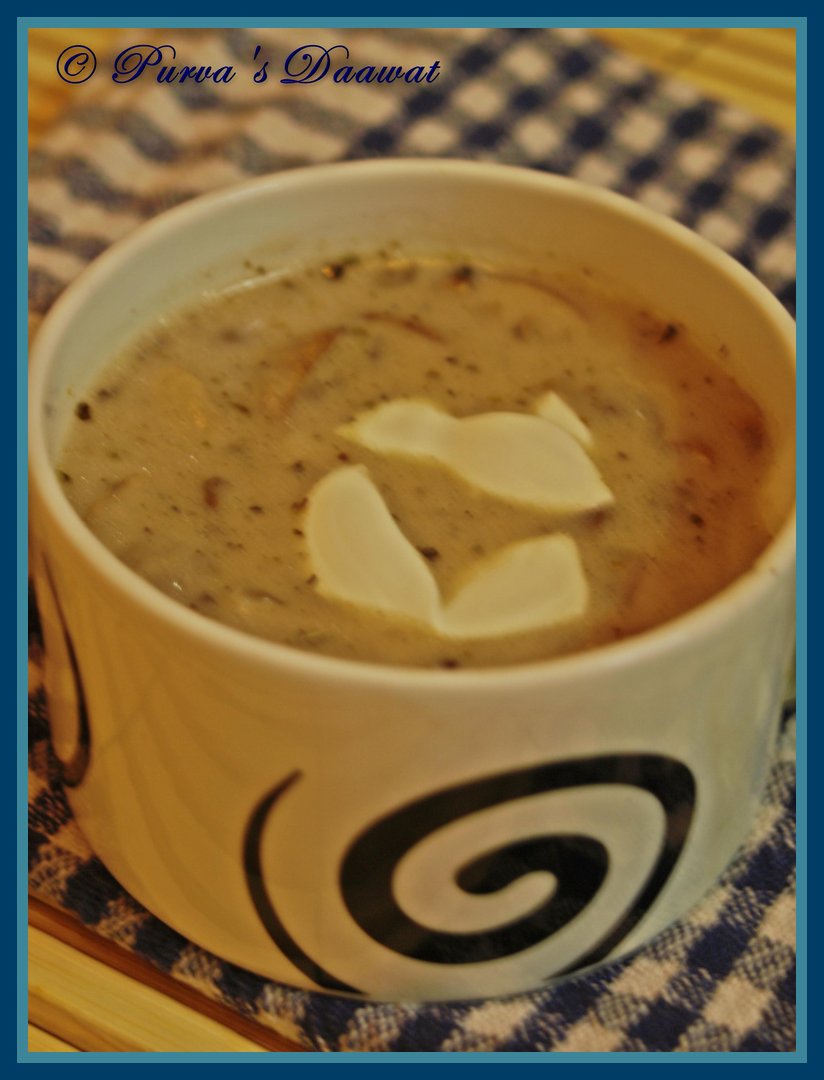
Cream of Mushroom Soup
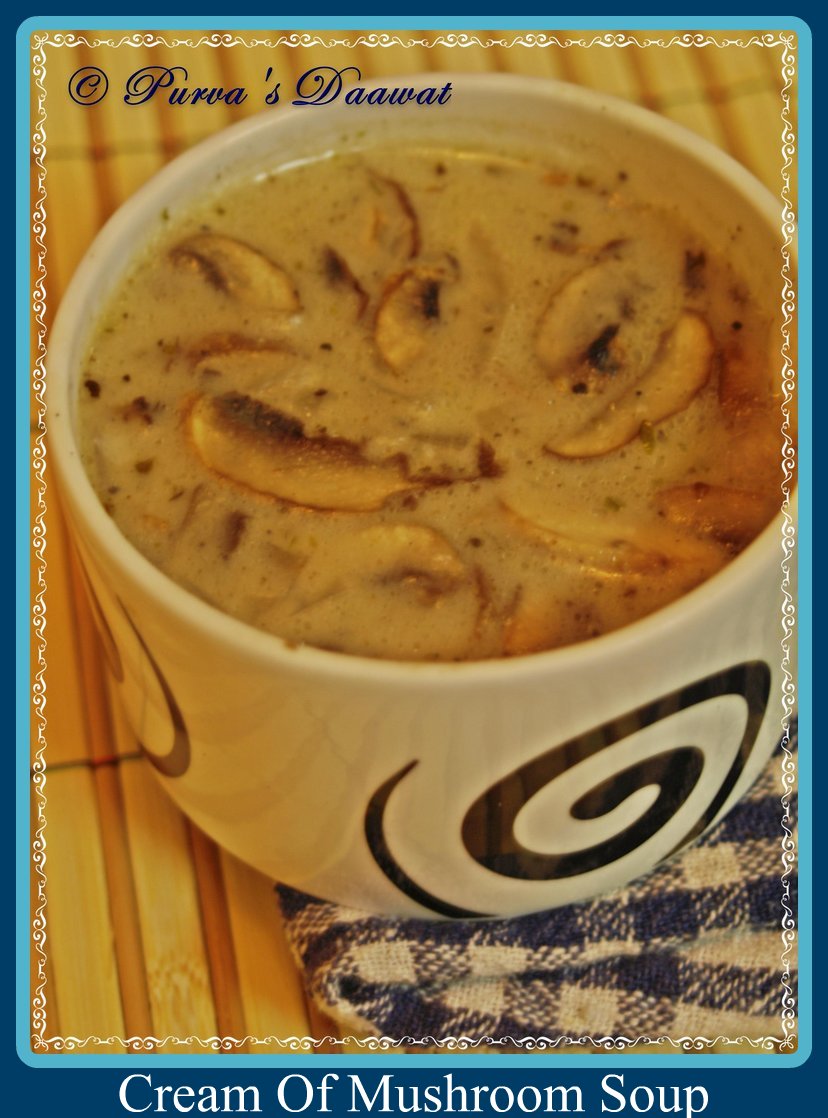
cream of mushroom soup

Mumbai weather goes from one extreme to another. After prolonged dry spells, monsoon has once again onset with its kind showers across India. Heavy chowers have changed the hot, sultry and humid climate to pleasant atmosphere. With the down pour of rains, nothing soothes me than a bowl of warm soup.

Mushrooms are available in abundance during rains. Wild mushrooms just pops out out all over the places. On one such rainy night, I just decided to sip Cream of Mushroom Soup. This creamy, thick and delicious soup is a meal in itself. The addition of mild herbs makes it more delectable.


Ingredients:

500gms Button Mushrooms
1 Whole Garlic
1 Finely Chopped Onion
1 Cup of Vegetable Stock or Water
1/4 Cup of Milk
2 Tablespoons of Butter
3 Tablespoons of Cream
1 Tablespoon of Maida (All Purpose Flour)
1 Tej Patta (Bay Leaf)
1 Teaspoon of Pepper powder
1 Teaspoon of Oregano (Optional)
1 Tablespoon of Chopped Parsely
Juice of 1/4 Lime
Salt as per taste

Method:

1. Remove the stems of the mushrooms and wash them very thoroughly. Cut the mushrooms in quarter or slice them.


2. Finely chop the Garlic and Onions. Heat a sauce pan and melt the butter. Add tej patta, finely chopped garlic and onions. Saute them till onions becomes light.

3. Add sliced mushrooms, along with a pinch of salt. Mix it well and cover it with lid. Since mushrooms cooks faster, remove the lid after a mintue. Mushrooms will be soft and they will realise their natural water.

4. Sprinkle a tablespoon of maida over it and mix it well. Add vegetable stock or water and allow it to boil.

5. After one boil add milk, cream, pepper powder, oregano and salt as per taste. Allow the soup to simmer on a low flame for 2 mintues. The Consistency of the soup should be thick. One can have the closer look of the texture and consitency of the soup.
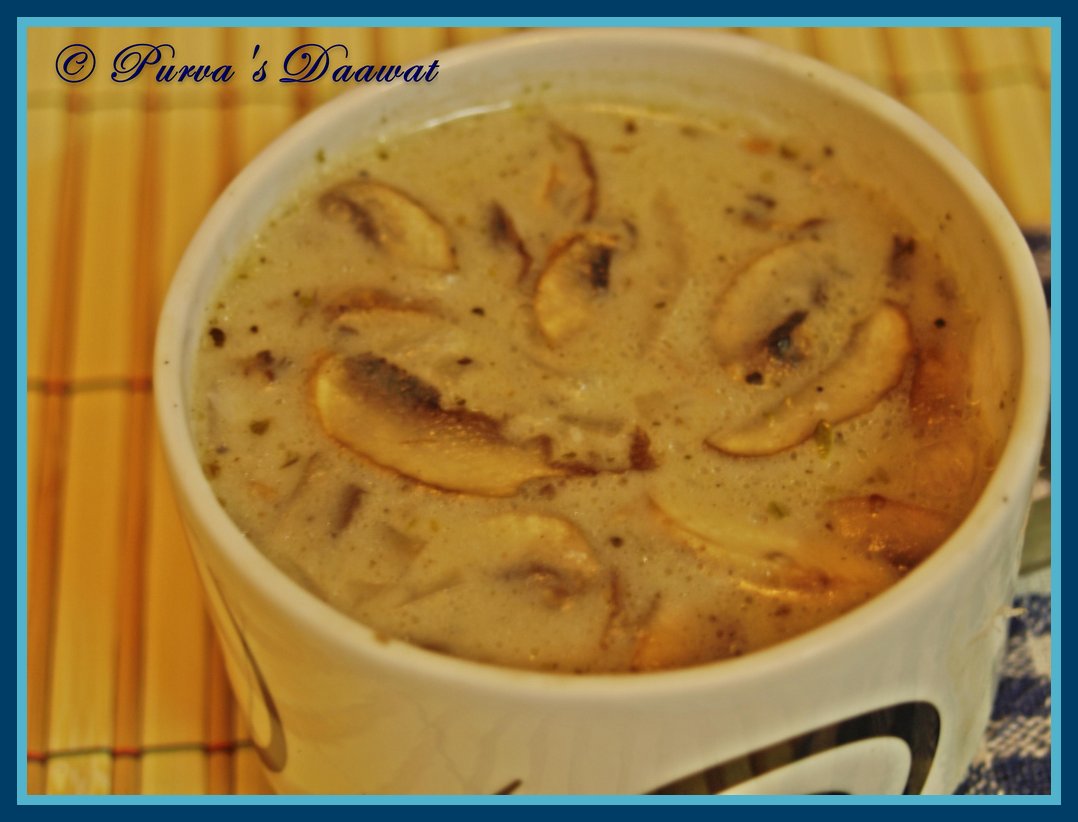
mushroom soup


6. Once the soup is ready sprinkle chopped parsely and add lime juice to it. Garnish it with a dash of cream before serving.

cream soup


This post goes for Siressha's Soup N Juice Event

Below Mentioned Entries also goes for the same Soup N Juice Event

* Beet Root Soup

* Cabbage & Mushroom Cream Soup

* Slushy Strawberry Banana Smoothie

* Tiranga Juice

* Virgin Pina colada


Priya Raj, Jyoti, Sandhya and Muskaan have shared with me Yum Blog Award and Honest Scrap Award. Thank you gals for your kind words and thinking about me...

You can read more about these awards here.....


Read more...

Monday, 7 September 2009

Chowli Churry ~ Black Eyed Beans Curry

chowli curry

Chowli Curry is 'R''s favourite curry, he can have this any time of the day. Chowli curry can be prepared in a jiffy and it taste simply delicious as I add varieties of masalas, to make it more chat pata and yummy.

Chowli or Black Eyed Beans are low in fat, high in proteins and rich in fibre. After having this curry, you bound to fill full due to rich fibre contents in chowli. In addition a diet high in fibre can reduce your risk of developing diabetes and help lower blood cholestrol levels, which can reduce the risk of heart diseases.

Ingredients:
1 Cup of Chowli (Black Eyed Beans)
2 Medium Sized Onions
2 Medium Sized Tomatoes
6 - 7 Garlic cloves
1 Small Ginger Piece
4 - 5 Curry Leaves
1 Teaspoon Cumin seeds
1 Teaspoon Coriander powder
1 Teaspoon Cumin powder
1 Teaspoon Red Chilli Powder
1/2 Teaspoon Turmeric powder
Pinch of Hing (Asafoedita)
1 Teaspoon Garam Masala Powder
1 Teaspoon Pav Bhaji Masala
1 Teaspoon Chana Masala Powder
1 Tablespoon Chopped Coriander
Juice of 1/2 Lime
Salt to taste
Oil
Water

Method:

1. Soak chowli ~ Black Eyed Beans for 6-7 hours or overnight. Once soaked, clean them in running water and drain them.

2. Take onions, ginger and garlic cloves in a bowl, and grind it to a smooth paste in a food processor.

3. Heat oil in a pressure cooker, add a pinch of hing and cumin seeds. Once the seeds starts spluttering add curry leaves and onion, ginger and garlic paste. Saute till onions turns light golden brown in colour.

4. In the same food processor container, grind the tomatoes in to a smooth paste. Add this tomato paste in the onion mixture and saute it.

5. Add pinch of salt, coriander powder, red chilli powder, cumin powder, hing and a pinch of salt and mix it well and saute the onion and tomato mixture.

6. Take a small bowl, add garam masala powder, pav bhaji masala and chana masala powder. Add two tablespoon of water in these masala and mix well to make a smooth paste. Add this paste in the pressure cooker and mix well with the onion and tomato paste. Allow the mixture to simmer for few minutes on a low flame. Mixing masalas with the water allows the masala to cook well and it gives a real different taste to the curry.

7. Once the masalas are cooked, add drained black eyed beans, water and salt to taste and mix well. Close the lid of the cooker and allow it cook.

8. Cook till 6 - 8 whistles, switch off the gas and allow the cooker to cool down. Once cool open the lid and add chopped coriander and lime juice to the curry. Allow the curry to simmer for 2 minutes.

9. Serve hot with rotis or parathas or even with rice.

This post is my entry for my Dear Friend Viki's
Side Dish For Chapati

This post heads to
MLLA- 15 hosted by Sia at Monsoon spice and is the Brain child of Susan of The Well Seasoned Cook


Mythreyi Dilip has showered upon me Honest Scrap Award,


Thank you for thinking about me and sharing it with me. One can read 10 Honest Things About Me Here.......

Rupali has obliged me with Yummy Blog Award and Passionate Chef Award, I am really grateful and thankful to her for this token of love.


Read more...

Monday, 31 August 2009

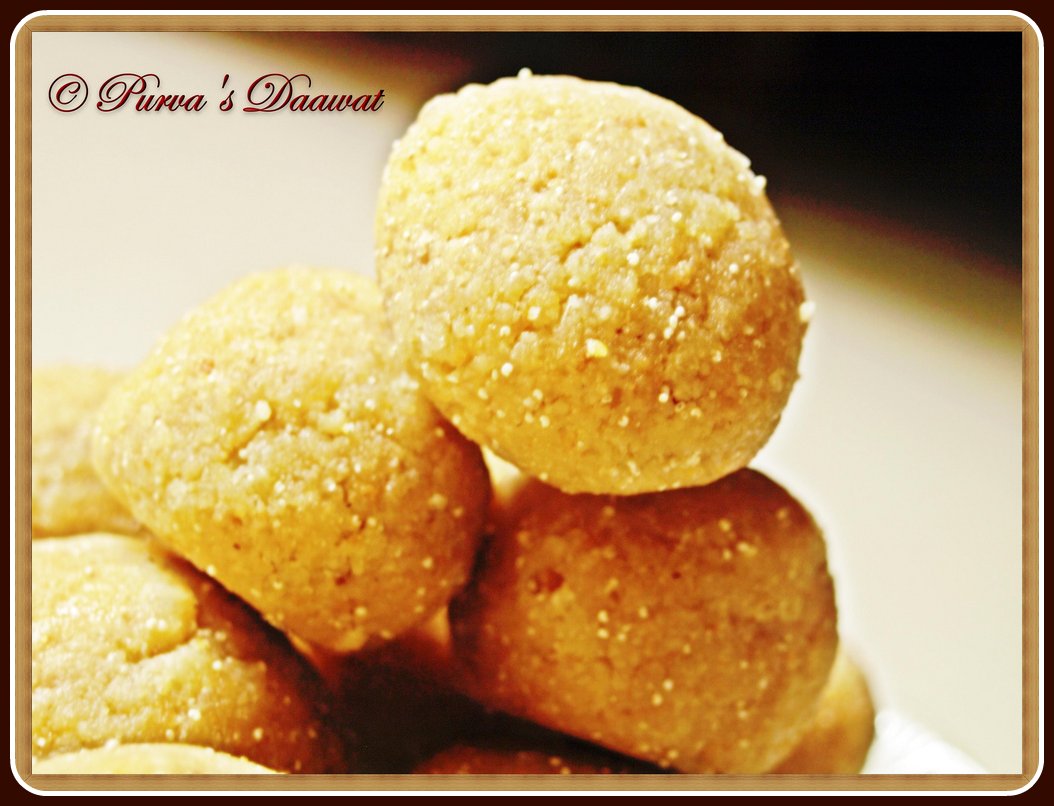
Churma Na Ladoo ~ Wheat Flour Ladoos

churma na ladoo

Ganesh Chaturthi is incomplete without Lord's Favourite Ladoos. Last year I made authentic Modak for Vighnaharta, this year I decided to serve him with our traditional Gujarati Ladoos called Churma Na Ladoo. Gujaratis and brahmin community in particular are very fond of these Ladoos. They made from wheat flour and ghee and it gets its sweetness from jaggery. Guajarati Brahmin's feast is incomplete without Churma Na Ladoo.

Ingredients:
2 Cups of Coarse Wheat Flour
1/2 Cup of Rawa (Semolina)
1/2 Cup of Milk
1/2 Cup of Water
2 Cups of Ghee
1 Cup of Ghee / Oil for Frying
2 Cups of Shredded Jaggery
2 Tablespoons of Elaichi Powder
1 Tablespoon of Jaiphal Powder (Nutmeg Powder)
1/2 Cup of Khus Khus (Poppy Seeds) / Sesame Seeds

Method:
1. Take course wheat flour, and add rawa to it. If you don't have course wheat flour, increase the amount of rawa to 11/2 cup. Add water, milk and knead a very though dough.

2. Make small balls or muthias out of this dough. Heat ghee or oil and deep fry these wheat balls till they turn brown in colour. This is the easy and best way to cook the wheat flour instead of traditional and time consuming method of making bhakris out of these small balls and then roasting them.

3. Once the wheat balls are fried, allow them to cool, later grind them coarsely in a food processor. The consistency should be of a coarse powder. Add elaichi and jaiphal powder in the grinded wheat.

4. Heat ghee in a pan, add shredded jaggery and allow jaggery to melt in the ghee, spread this mixture in the grinded wheat powder. Mix well with ghee, jaggery and wheat mixture with the help of a stapulla. Don't mix it with your hands as it will burn them as the ghee and jaggery mixture is very hot.

5. Once properly mixed, apply small amount of ghee on ur palms, take the ghee, jaggery and wheat mixture and make small round balls or ladoos by pressing it in between your palms. Make the ladoos when the mixture is still hot. Roll the ladoos in khus khus or sesame seeds.

6. Allow them to cool and place them in the air tight container. They can be stored for almost 10 days.

This is my entry for my very own
Janmashtami & Ganesh Chaturthi Event.


This post also goes for Sanghi's IFL - Milk Event and Sara's Sweet and Savoury Event


My Dear Friends Sanghi, Priya Raj and Lone Acorn have tagged me, you can know more about me through this tag here..... thank you girls for thinking about me and tagging me.


Read more...

Monday, 24 August 2009

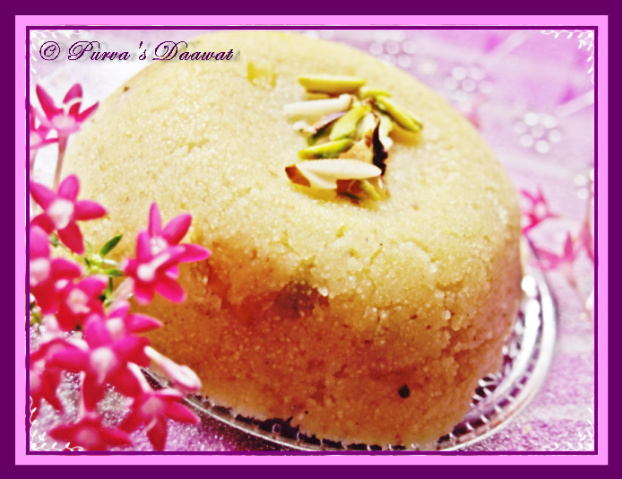
Suji Ka Halwa ~ Rava Sheera

Suji ka halwa

Wishing Happy Ganesh Chaturthi

Lord Ganesha is the God of prosperity and wisdom. Ganesh Chaturthi is celebrated with great pomp and devotion in Mumbai. There are Ganesh Pandals in every nook and corner and lanes of Mumbai. Pandals are decorated and there are many festive programmes organised for the Lord. Ganesh Idols are bought one day earlier at night. Every body is out to welcome the beloved God by Chanting ''Ganpati Bappa Morya''.

This 10 days Sarvajanik festival is celebrated all over Maharashtra with great zeal and enthusiasm. People also get Ganesh Idols in their homes and in their Societies or apartments. Even our apartment has got Ganesh Idol for 5 days. There are lots of exciting programmes lined up to celebrate the festivals. Will include my readers with this celebration by showcasing the pictures of the festival in my next post.

This time I prepared Suji Ka Halwa or Sheera as one of the Naivedya for Vinayaka. Suji Ka Halwa, is popularly known as Sheera in Western India. It is a sweet semolina pudding Sheera is always prepared as Prasad or Naivedyam for Satyanarayan Pooja. This is by far the simplest and easy dessert one can prepare for any occasion. All the ingredients required to prepared this rich and aromatic dessert is easily available in our house. I love the aroma, when suji (semolina) is getting roasted in ghee and the best part about Sheera is you can even store it for one day and re heat it the other day and enjoy it.

Ingredients:

1 Cup Suji (Rava, Semolina)
4 Tablespoons of Ghee
1 Cup of Sugar
1 Tablespoon of Malai / Cream (Optional)
2 Cups of Whole Milk
1 Tablespoon of Elaichi (Cardamom) Powder
1 Tablespoon of Kish Mish (Raisins)
1 Tablespoon of Chopped Nuts (Cashew nuts, Almonds, Pista)
Few Saffron Strands


Method:
1. Heat ghee in a deep pan, add chopped cashews and roast them, once roasted remove them and keep them aside.
2. Add rava or suji or semolina in the melted ghee. Roast the suji for 5 to 10 minutes on a low flame.
3. While roasting the suji, add sugar, cardamom powder, raisins, roasted cashews and other chopped nuts. Meanwhile, boil the whole milk and add kesar to it.
4. Roast the suji till it turns light golden in colour and one can smell the aroma of the roasted suji.
5. Once the suji is roasted add boiled milk and cream to roasted suji, on a low flame keep on stirring the suji and milk. See to it no lumps are formed while mixing suji and milk.
6. Keep on stirring the mixture till you get a thick halwa like consistency. Garnish it with chopped nuts and serve it hot.
The whole post is for my very own Janmashtami & Ganesh Chaturthi Event.


This post also goes for Sanghi's IFL - Milk Event


Sireesha, Priya Raj and My Dear Friend Sukanya has shared with me Scrumptious Blog Award -a blog award given to sites who: Inspire you Encourage You May give Fabulous information A great read Has Scrumptious recipes Any other reasons you can think of that make them Scrumptious!

Thank you girls! for considering me worthy for this award, I promise will come up with more exciting recipes.


Sukanya has also shared with me Kreative blog award, One lovely Blog Award and award


Read more...
Tuesday, 18 August 2009

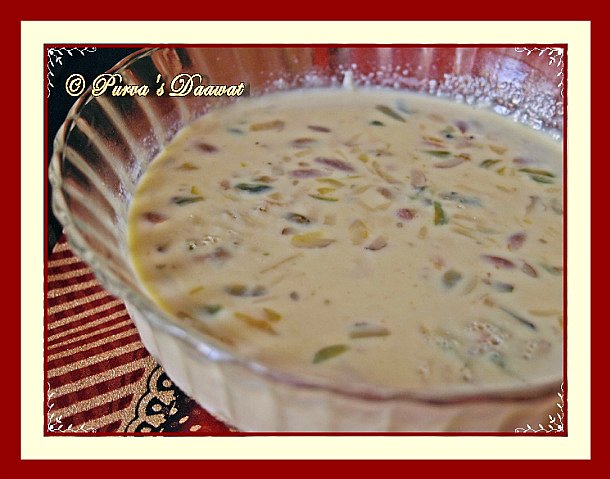
Basundi ~ Awards


basundi


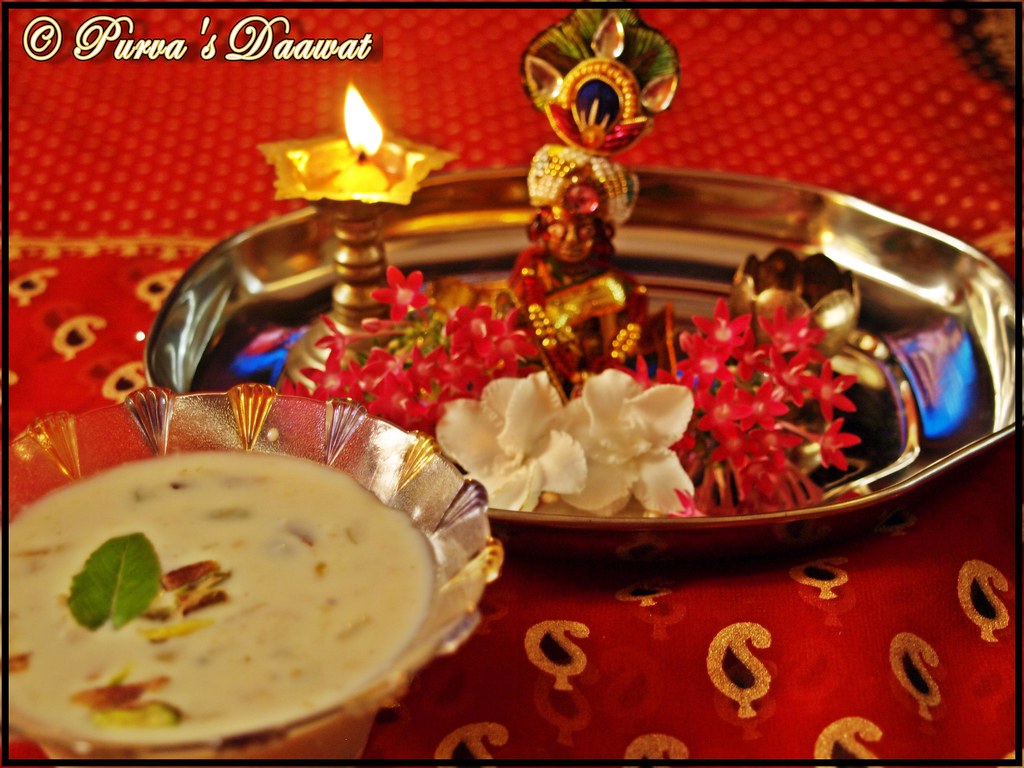
I usually make milk based dessert for Janmashtami as Milk was loved by my Bal Gopal. Last year I made Kheer
for Nandlala and made recently made Kalakand on Rakshabandhan, so decided to try my hands on Basundi this time.

Inspite of Swine flu scare in Mumbai, people were out on the streets with or without mask to watch the Dahi Handi Procession, it did not hamper the festive spirits of people and like always there were lots of Dahi handis all over Mumbai.

Basundi is a rich dessert loved by all in my family. Basundi is a thick, creamy dessert made by burning milk on a low heat and reducing milk to half. It is served chilled and garnished with lots of dry fruits. It is prepared usually during festive seasons in Gujarati households.

The best part about this dessert is one can prepare Basundi, one day in advance, and it becomes more rich and creamier as you chill it more.


Ingredients:
2 Litres of Full Fat Milk
1 Bowl of Sugar
1 Tablespoon of Elaichi Powder (Cardamom)
1/2 Tablespoon of Nutmeg Powder
3 Tablespoon of blenched nuts (Charodi, Almonds and Pistachio)
A pinch of Saffron

Method:
1.
Take a deep pan (preferrably Non-stick), add 2 litres of full fat milk and bring it to boil.
2. Allow it to boil on a very low flame, keep on stirring it occassionally.
3.
s the milk keeps on burning it will start coating on the sides of the vessel. With the help of a spatula keep on stirring the milk and remove the milk coating from the sides.
4. When the milk reduces to half, add sugar, elaichi powder, pinch of saffron and half blenched nuts.
5. Milk will turn light pink in colour and will be very thick in its consistency. Remove it from the heat and allow it to cool.
6. Once cool down, refrigerate it for few hours. One can see the layers of thick cream on top once the basundi is chilled.
Garnish it with nuts and saffron, serve it chilled.

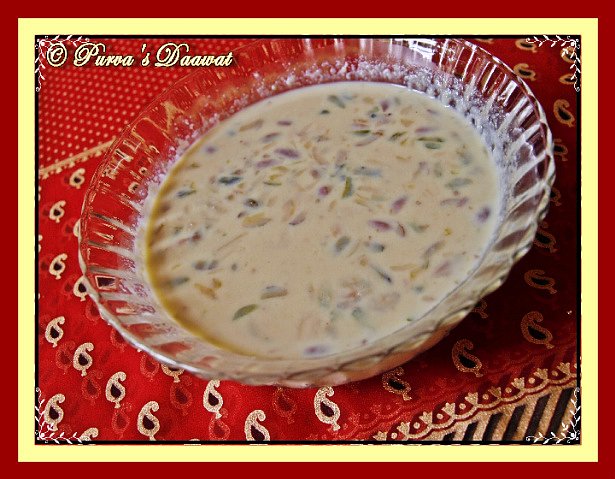
basundi1


janmashtami naivedya

This whole post is for my very own Janmashtami and Ganesh Chaturthi Event


This post also goes for Sanghi's IFL - Milk Event


Lovely Sangi has showered me with this cute gift ''A Fabulous Blog Award'', Thank you dear, will always cherish your lovely gift


Pinky has also shared with me Kreative Blog award, I love your Blog award and One Lovely Blog Award, Thanks a ton for considering me worthy for this award.


Tuesday, 11 August 2009

Kalakand ~ Awards


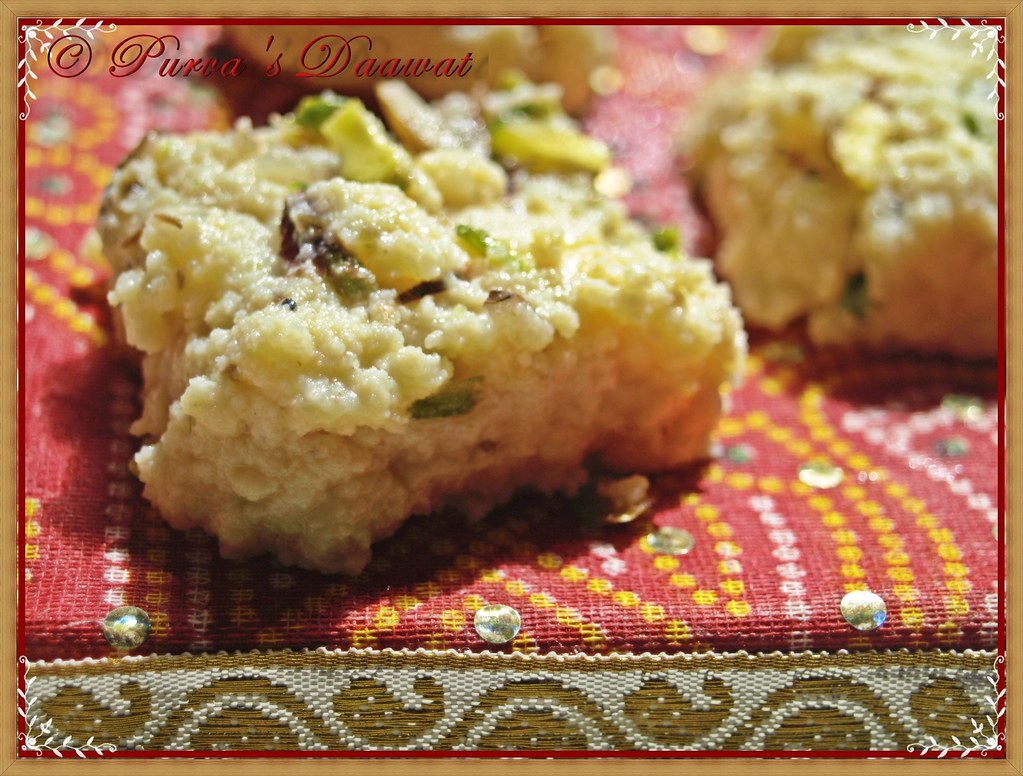
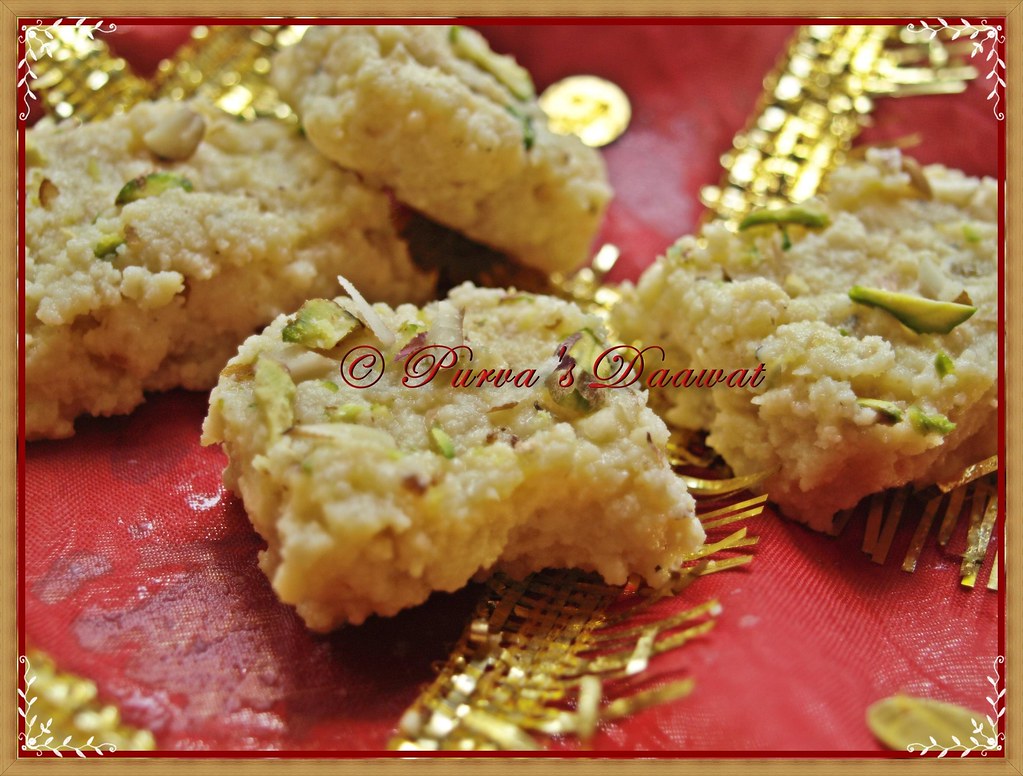
Kalakand


With The Onset of Sharavan, starts the Festive season of all Hindus and my grey cells starts working overtime thinking on what to prepare this time for the family and friends on the occassion of the auspicious festivals. This time it was my first Rakshabandhan after my marriage in India, as we left for UK immediately after my marriage.

We had planned a big get-together for my Hubby's sister and his cousin sisters as it was Rakhi and house warming party clubed together. The whole menu was decided except for the sweets. I was not able to decide which sweet to prepare for them as well as my brother.

Have you ever heard that a disaster in your life brings lots of praises and appreciation. I am a perfect example, that a disaster was a blessing in disguise for me and it got me lots of praises. One day left for Rakhi and I had still not zeroed upon the sweet, I was boiling the milk and it got spoiled. I was so upset as it was almost 10 at night and all the shops had closed and there was no milk at my place for the next day morning tea. But I litted my Dimag ki Batti and decided to make Kalakand for the Rakhshabandhan. I sieved the spoiled milk in a clean muslin cloth and removed the excess water and collected the Chenna and referigerated the Chenna for my next day preparation.
The Kalakand was appreciated by all and was over in one go. My Hubby's cousin were all ears for the recipe of the same. And I was all happy with my collars up with those appreciations.

Let me share the exact recipe in detail for this rich milk based delicious sweet ''Kalakand''. But let me caution my readers that this sweet is simple and easy but demands lots of patience.

Ingredients:
4 Litres of Milk
1 Cup of Sugar
Juice of 1 Lemon
1 Tablespoon of Elaichi (Cardamom) Powder
1/2 Cup of Chopped Pistachio and Almonds
Patience (A must Ingredient )

Method:

1. Take 2 Litres of Milk and allow it to boil. When its boiled with the gas on add lemon juice to it and allow the curd like small balls to separate from the milk. Keep boiling till all the milk turns in to curd like balls and one can see water separated from the milk.
2. The curd like balls are called Chenna (Fresh Paneer). Sieve the Chenna with clean muslin cloth and remove the excess water. Press the Muslin Cloth and remove the excess water if any. In my case I have used previous day chenna of spoiled milk which was 1Litre Milk and I bought other 3 Litres of Milk, Out of which I used 1 litre of milk to prepare the more chenna and other 2 litres of Milk for khoya preparation. Since I had to cater many people the quantity of milk used for Kalakand is more. One can used 2 litres of Milk - 1 litre for Chenna and remaining 1 Litre for Khoya.
3. Take a deep pan (preferrably Non-stick). Add remaining 2 litres of Milk and bring it to boil. When it reduces to half the quantity add the sieved Chenna, Sugar and Elaichi powder.
4. Now comes the most important ingredient - Patience in to picture. Keep on burning and stirring the milk on a low flame and Chenna continously. As the milk keeps on burning it will start coating on the sides of the vessel. With the help of a spatula keep on stirring the milk and remove the milk coating from the sides. The whole process may take 45 to 60 minutes or at times even more.
5. Keep on stirring the milk and chenna, till the milk is reduced to a thick lump. Milk is burnt completely and converted to Khoya and is mixed with Chenna, sugar and elaichi powder to become ''Kalakand''. Grease a plate with Ghee (White Butter) and spread the Kalakand mixture on it.


6. Allow the mixture to cool and spread chopped nuts on it and one can refrigerate the mixture. Once the Mixture is set, cut in to desired shapes. Your Kalakand is ready and even you be ready to receive the praises.


Kalakand pieces


This is my entry for My dear Friend Priti's FF - Rakshabandhan Event a joint venture started my us to enjoy the festivities of the season.


This entry also goes for Sanghi's FIL - Milk Event


Dear Chakle Re....(Sorry I am not aware about her Name - Kindly share it withe me next time) and Malini Has shared with me I love your Blog Award, Kreative Blog Award and One Lovely Blog Award. Thank you gals for sharing this bundle of Joy with me, I am really honoured.


Read more...

Thursday, 23 July 2009

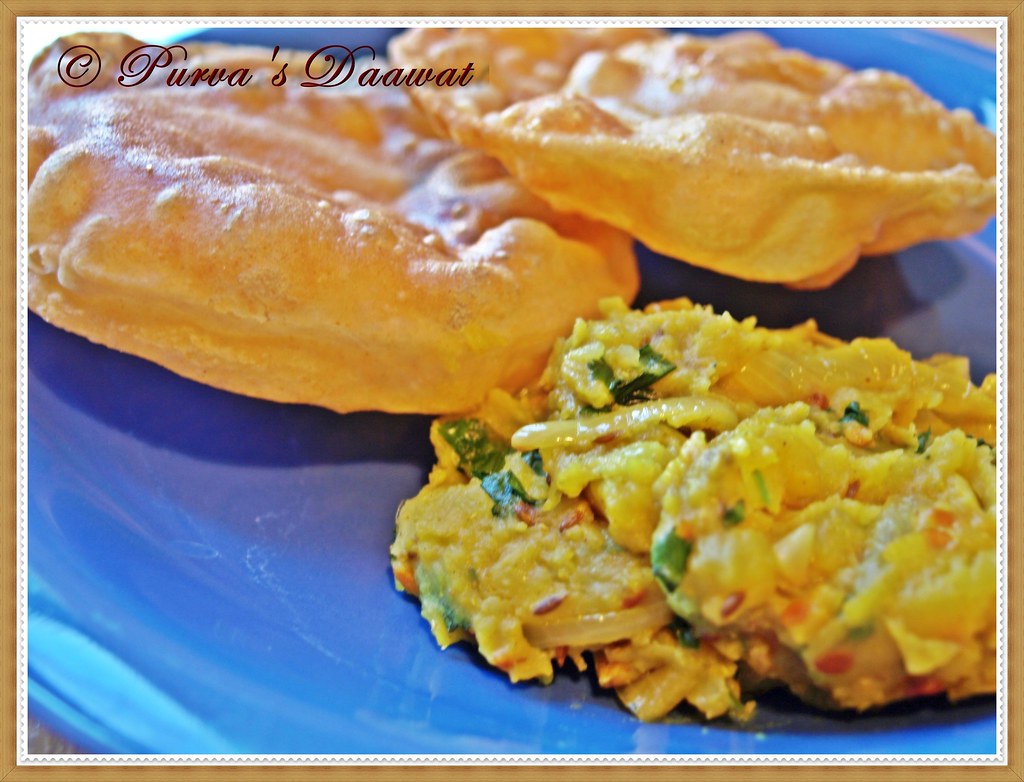
Puri Bhajji ~ Alu Puri

Puri Bhaji

Dear Reader and my fellow blogger friends, I was away from the Blogosphere circuit as I was busy settling things in my new house. But I am back with my favourite breakfast dish Puri Bhajji.

Puri Bhaji is the most popular Breakfast at our place. Puri Bhaji is popularly known as Alu Puri in Northern parts of India.
Its being served as heavy brunch at my place over the weekend. Puris are puffed wheat flat breads, they are served with delicious potatoe vegetable popularly known as Bhajji in Maharashtra. I simply love the aroma of curry leaves in this sabji. This simple yet tasty meal is ideal for a lazy weekend brunch.

Ingredients

For Puris

2 Bowls Wheat flour
2 Teaspoon Oil for Kneading
1 Cup of Luke warm water
1 Teaspoon of salt

Oil for Frying


For Alu Bhajji
5-6 Potatoes
2 Medium sized Onions

5-6 Curry Leaves

1 Tablespoon Garlic Paste

1 Tablespoon Ginger Paste

1 Tablespoon finely chopped Green Chillies
2 Teaspoon Mustard seeds
2 Teaspoon Urad Dal

1 Teaspoon Turmeric Powder

2 Teaspoon Coriander and Cumin seed powder
1 Tablespoon of Lemon Juice

1 Cup of Chopped Coriander

Salt as per taste


Method

For Puri

1. Take wheat flour and sprinkle salt and little oil and mix it well.

2. Add water and knead the dough. Keep it aside for few minutes.

3. Roll small round puris.

4. Heat oil and fry the puris.

For Alu Bhajji
1. Pressure cook the potatoes and remove the skin and keep it aside to cool. Mash the potatoes
2. Heat the oil, add a pinch of asafoedita and then add urad dal and mustard seeds. Once the seeds starts spluttering add curry leaves, ginger and garlic paste.

3. Add chopped onions and saute for few minutes till they light golden brown.

4. Add turmeric powder, coriander and cumin powder.

5. Add mash potatoe
s and salt as per taste and mix well.

6. Cook for few minutes and spread lemon juice and garnish it with coriander leaves.
Enjoy yummy hot puris with alu bhajji

Here is my entry fot my Dear Friend EC's WYF - Breakfast Event


https://blogger.googleusercontent.com/img/b/R29vZ2xl/AVvXsEhbeQar_EBYPkwvMnkfBFiZQYqlppYo870ech75psUUlfKxQ4n-JkGlX5UZubWe-mLMAQWLHE1jd7R02dsbmdVI2h2umNPSPpiVoViCX0wyj9q0EaXwtjnxTHdFDcPNJSVBL9fI1slfEV07/s320/logo+aug.JPG


Read more...

Wednesday, 24 June 2009

Patra ~ Alu Wadi ~ Taro Leaves Pinwheels


alu wadi
Align Centre


One can see few similarities in Gujarati and Maharashtrian cuisine, due to the geographical similarities in these two states. Infact they were one state before India got Independence. On 1st May 1960, these two states of Maharashtra and Gujarat were formed on linguistic lines.
Few dishes are prepared in Maharashtrian as well as Gujarati Cuisine but have different names, like Puran Poli is a Maharashtrian sweet dish, which is known as Gali Rotli in Gujarti Cuisine. Famous Gujarati Khandvi is known as Suralichi Vadi. One such dish which is prepared in both the cuisines is Patra ~ Alu Wadi.

Patra ~ Alu Wadi is a popular Gujarati and Maharashtrian snack. Taro or Colocasia leaves are rolled and filled with besan tangy and spicy paste. It resembles a green and gold pinwheel when sliced. Patra is also known as "pathrode," and the leaves are also called "alu" or even "elephant ears." The art of rolling the patra is important so that it binds the paste with the leaves while they are being steamed.


Ingredients:
8 - 10 Patra Leaves /Alu Leaves/ Taro Leaves Half Bowl of Besan (Bengal Gram Flour) 2 Tablespoon Garlic Paste
2 Teaspoon Red Chilli Powder
1 Tablespoon Tamarind Pulp
1/2 Teaspoon Turmeric Powder
1 Teaspoon Coriander Powder
11/2 Tablespoon of Jaggery
Salt as per taste
Oil

1 Teaspoon Mustard seeds
1 Teaspoon Fenugreek seeds
2 Teaspoon Sesame seeds
Grated Coconut and Coriander leaves for Garnishing

Method:

1. Wash all the Taro leaves carefully and then wipe it with clean cloth.


2. In a small bowl dissolve Jaggery and Tamarind pulp and leave it for 30 minutes.
3. Now make thick besan paste in a bowl, by placing besan, garlic paste, red chilly powder, coriander powder, turmeric powder, Salt to taste, tamarind and jaggery pulp. Add oil to this paste and if required very less water to make a thick paste.
4. On a clean surface, place a big taro leaf and with the help of your fingers spread the besan paste on the front side of the leaf.
5. Now a place another smaller leaf on the bigger leaf and apply the besan paste on it.
6. Now fold both the sides of layered leaves and keep applying the besan paste on every fold. Now roll the leaves tightly and keep on applying the paste on every fold and make a log.


7. In a similar way apply the paste to the rest of the Taro leaves.
8. Steam the Taro leaves log for 20 - 30 minutes.
9. Once they are steamed, allow them to cool and then cut the logs vertically. Once they are cut the will give a pin wheel look filled with spicy and tangy besan paste.


10. Few people prefer eating steamed Patra / Alu Wadi by dipping it in oil. And few deep fry them. But I prefer it by tempering them.
11. For tempering, heat oil in a deep vessel. Once the oil is hot add Mustard seeds and fenugreek seeds. Once they start spluttering add Sesame seeds.
12. Place the steamed Patra / Alu Wadi in this tempering and mix it well. Allow it to cook in this tempering for 1 Minute.
13. Garnish the Patras / Alu Wadi with grated Coconut and chopped Coriander leaves and serve it with either hot tea or serve it as a side dish in your main course

This is my entry for Priyanka's Shaadi Ki Thali Event, as Patras are prepared as one of the savoury snack during Gujarati weddings


Read more...

Wednesday, 20 May 2009

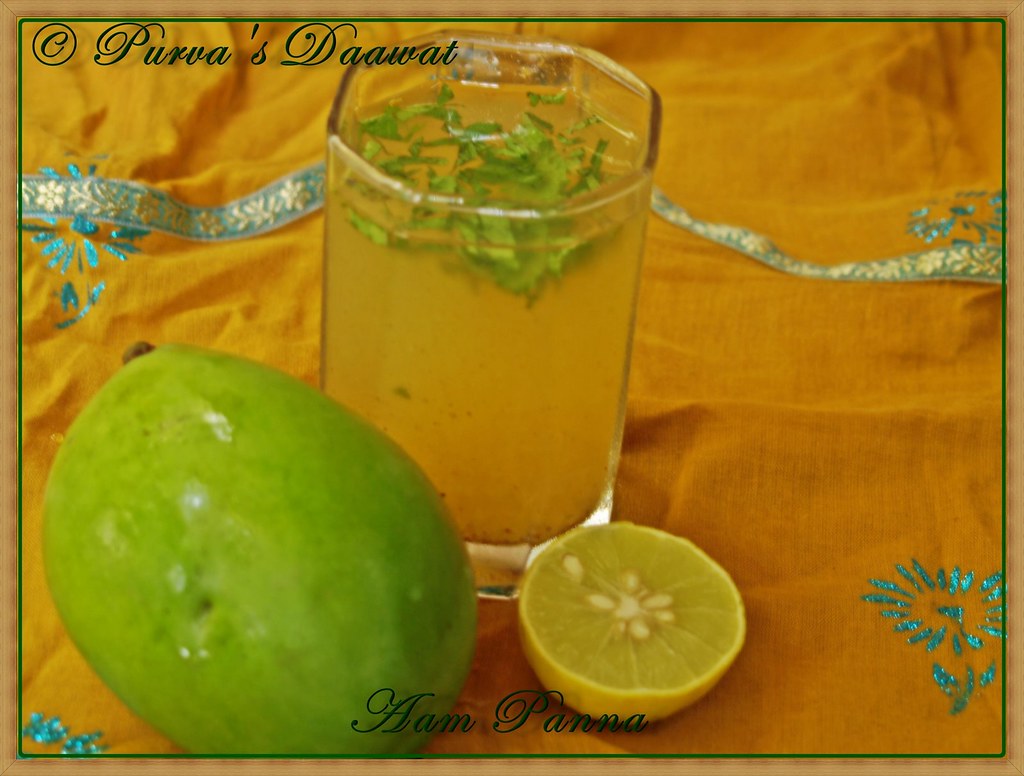
Aam Panna ~ Kayree Panha


aam panna


With the Onset of Summers starts the season of King of Fruits - Aam ~ Mangoes. The sweltering heat of summers consumes lot of your energy and make you go dehydrated. Heat stroke and heat exhaustion are the most serious health illnesses caused by hot environments, and a real danger to people who work outside in the summer.
One such power booster drink comes to the rescue to prevent heat stroke ~ Aam Panna.
Aam panna for North Indians and Kayree Panha for Maharashtrians, this drink is a must in our house during summers. It is prepared using raw mangoes, sugar and an assortment of spices. This drink is a wonderful source of vitamin C and prevents the loss of excessive sodium chloride and iron from the body during summer due to sweating. It also prevents summer diarrhoea, colds, piles, morning sickness, indigestion and constipation. The spices used in this drink like Rock salt is cooling, anti-acidic, anti- bilious, anti-phlegmatic, and digestive. It has natural minerals, which are absent in commercial table salt.Cumin helps to prevent flatulence.
With Aam Panna to my rescue in Summers I can happily sing this famous number of Beatles ~
''Here comes the sun, here comes the sun, and I say it's all right"

Ingredients:
2 Raw Mangoes

1 Bowl Sugar

1 Teaspoon Grounded Pepper
2 Teaspoon Roasted Cumin Powder

2 Kesar / Saffron Strands
Rock Salt to taste
Water
Crushed Ice
1 Tablespoon Chopped Mint Leaves

Method:
1. Peel the skin from the raw mangoes and pressure cook it.
2. Once the mangoes are properly pressure cooked, remove the pulp of the cooked mangoes.
3. Add sugar to the pulp and blend them together with the help of the blender.
4. Now heat on a low flame the raw mango pulp and the sugar mixture and add rock salt, kesar and roasted cumin seed powder to the pulp. Allow the pulp to heat for 2 minutes and remove it from the gas.


5. Allow it to cool. Before serving mix the pulp crushed ice and pour chilled water. Garnish it with chopped mint leaves.
One can even store the mango pulp in a bottle for 4 days and serve with chilled water as and when required.

Here is my entry for Priti's Summer Treat Event


My new friend Lena has shared with me I love your Blog award. Lena! Thanks for considering me for this award.


Read more...

Tuesday, 12 May 2009

Hariyali Masala Dal


Hariyali dal


Since My hubby is less fond of veggies and have more inclination towards pulses
, I prepare different dals using combination of different pulses. One such recipe I came across in a newspaper was Hariyali Masala Dal and I had jotted down in my treasure book (which is my recipe book).This dal is protein packed and includes many pulses and is prepared by adding unique coriander based paste.


Ingredients
1/4th Cup Masoor Dal
1/4th Cup Tuvar Dal
1/4th Cup Moong Dal
1/4th Cup Urad Dal
1 Cup Finely Chopped Onions
1 Cup Finely Chopped Tomatoes
Salt as per taste
Oil

For Paste
7 -8 Garlic Cloves
3 Teaspoon whole Coriander seeds
1 Teaspoon Cumin seeds
1/2 Teaspoon Turmeric powder
1/2 Cup of Chopped Coriander leaves
2 Dry whole red chilles
1 Small Ginger
1/2 Cinnamon Stick
2 Cloves

Method:
1. Soak all the dals for 2-3 Hours. Once soaked drain them and then pressure cook the dals and keep it aside.
2. Dry roast Coriander seeds, Cumin seeds, red chillies, cinnamon stick and cloves. Once roasted along with
coriander leaves, ginger and garlic grind all the dry masalas in to a fine paste.


3. Heat oil in a pan, add chopped onions and saute for till they turn light golden brown. Add paste and chopped tomatoes and saute till oil starts leaving the sides of the vessel.
4. Now add cooked dals and salt as per taste and mix it properly with the onion and paste mixture. If required add water and cook properly.
5. Serve it with rice or roti.


This is my entry for Divya's Bookmarked Recipes Event


Read more...

Monday, 23 March 2009

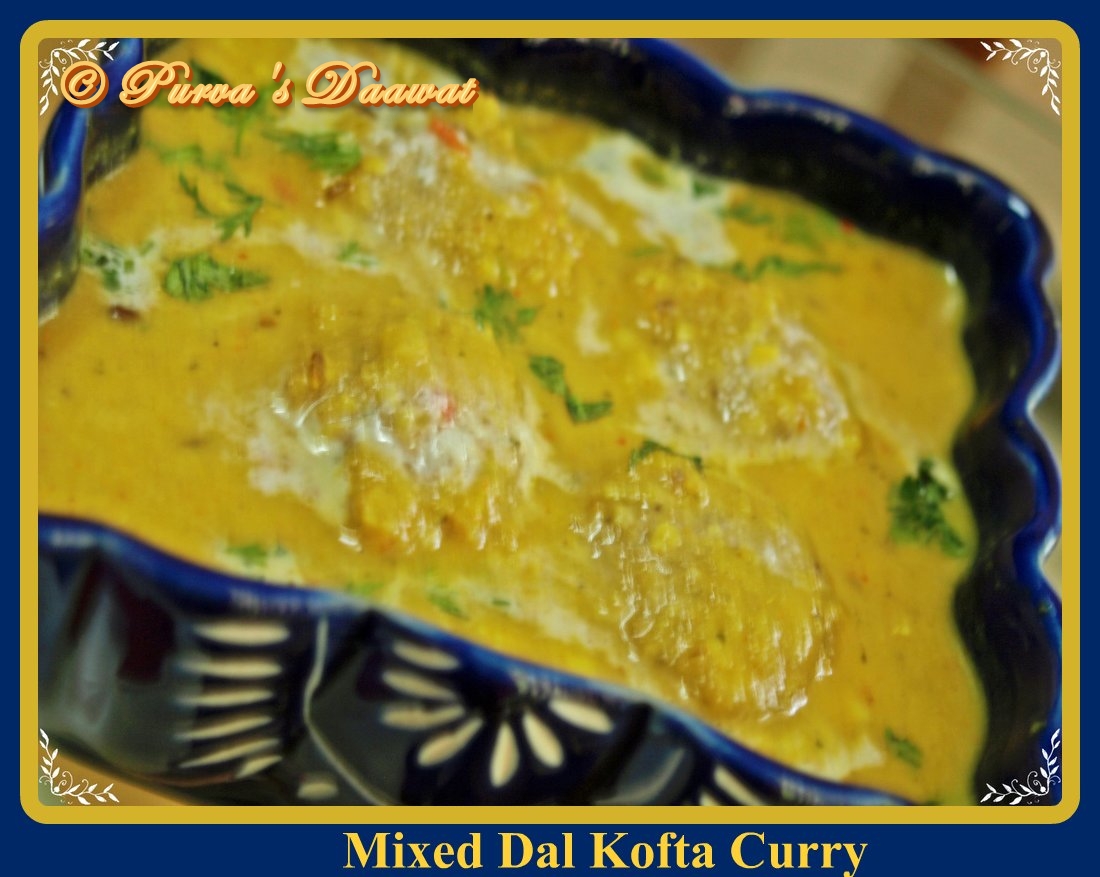
Mixed Dal Kofta Curry

mixed dal kofta curry

Mumbai has been described not as an indigenous Indian city, but as a cosmopolitan city. This benefits we Mumbaikar in knowing many languages of India. My stay in Mumbai this time has helped me to watch various regional cookery shows which are quite popular in Indian Telly these days.
In the afternoon I and my mother in law are glued to Television watching different cookery shows featured on various regional channels. One such channel is Zee Marathi and the show is ''Aamhi Saare Khavayye''. Mixed Dal Kofta Curry was featured in this TV series and next day was Holi, so I tried this easy, yet delicious dish which is perfect for such festive occasions. I had made few variations in the original dish to suit the taste palates of my family members.

Ingredients:
For Koftas
4 Tablespoons of Urad Dal (Split Black Gram)
1/4 Cup of Toor Dal / Arhar Dal / Tuvar Dal (Split Yellow Pigeon Peas)
1/4 Cup of Chana Dal (Split Bengal Gram)
1/4 Cup of Moong Dal
1/2 Cup of Chopped Coriander Leaves
2 Tablespoons of Chopped Mint Leaves
2 Teaspoon of Saunf (Ani seeds)
1 Tablespoon of Garam Masala powder
Salt to taste
Oil

For Gravy
2 Large Onions

1 Large Tomato
1 Tablespoon of Ginger Garlic Paste
1 Teaspoon of Green chilly paste

1/2 Cup of Dal Kofta Batter (see above ingredients for Kofta)
4 -5 Curry Leaves
1 Teaspoon of Cumin seeds
1 Teaspoon of Mustard seeds

1 Badiyan (Star Aniseed)
1 Teaspoon Turmeric powder
2 Teaspoon Coriander and Cumin seed powder
1 Teaspoon Red Chilly powder
1 Tablespoon of Garam masala powder

1/2 Cup of Cream
Water
Salt to taste
Oil

Method:

1. Soak all the dals overnight, or for 6 - 8 Hours. When they are soft, coarsely grind them in the food processor.
2. Add
Chopped Coriander Leaves, Chopped Mint Leaves, salt, saunf and garam masala powder in the dal batter.
3. Heat oil for frying the dal koftas, add warm oil in the dal batter and make small balls from the dal batter. If the batter is not thick, try using deep round spatula or big spoon to drop the balls in the oil for frying. Keep 1/2 cup of the kofta batter aside to add in the gravy.
4. Deep fry all the koftas and place them on the tissue paper. After few minutes, place all the koftas in cold water.


5. For gravy grind onions and tomatoes in a smooth paste. Heat oil, add badiyan, cumin seeds and mustard seeds
.
6. When seeds starts spluttering add curry leaves and onion paste. Saute for few minutes. Add tomato paste, turmeric powder, coriander and cumin seeds powder, red chilly powder and saute till oil leaves the side of the vessel.
7. Add dal kofta batter which was kept aside and saute for few minutes. Since its a dal mixture the gravy will become thick, so add 1/2 cup of water and garam masala and mix it in the gravy. 8. Add dal koftas in the gravy and cook for few minutes. Once the curry is cooked add cream and chopped coriander leaves in the end.

This is my entry for
Holi Hai! Event


Read more...

LinkWithin

LinkWithin Related Stories Widget for Blogs

IndiRank


FeedBurner FeedCount

  © Blogger templates Newspaper III by Ourblogtemplates.com 2008

Back to TOP